Where Academic Life Begins in Earnest

Primary school at Aurinko is where children step into the academic world, not with pressure, but with purpose. This is the stage where reading, writing, maths, and scientific thinking take shape alongside a child’s growing sense of who they are and how they relate to others.

We introduce experiential learning through the cycle of experience, reflect, analyse, express, and act, embedded in a STEAM curriculum that treats every subject as connected, not compartmentalised. Children do not just learn content. They learn how to learn.

Admissions are open throughout the year.

Three Dimensions, One Child

Every lesson at Aurinko Primary is designed to develop the child across three dimensions simultaneously:

Hands — Psychomotor skills, making, doing, building

Head — Cognitive understanding, knowledge, reasoning

Heart — Attitudes, values and emotional intelligence

Activities are designed for different learning styles, some individual, some collaborative always working toward higher order thinking rather than rote recall. Children are regularly given platforms to present their work to wider audiences, building confidence and communication skills from an early age.

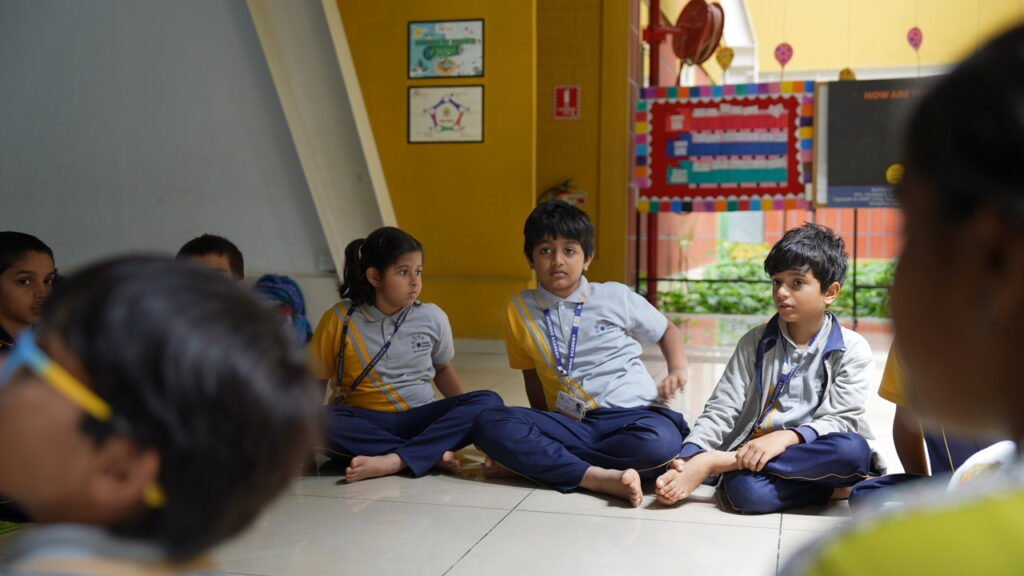
Circle Time is a daily fixture: a non-judgmental space where children engage with life skills, community awareness, and emotional intelligence, developing vocabulary and awareness to understand themselves and the world around them.

Every class is planned so children can learn from people, places, and experiences, not just from a textbook.

What Makes an Aurinko Primary Classroom Different

Collaborative Environment
Children work together constantly, building new ideas and learning to engage with viewpoints that differ from their own.
Creative Expression Through STEAM
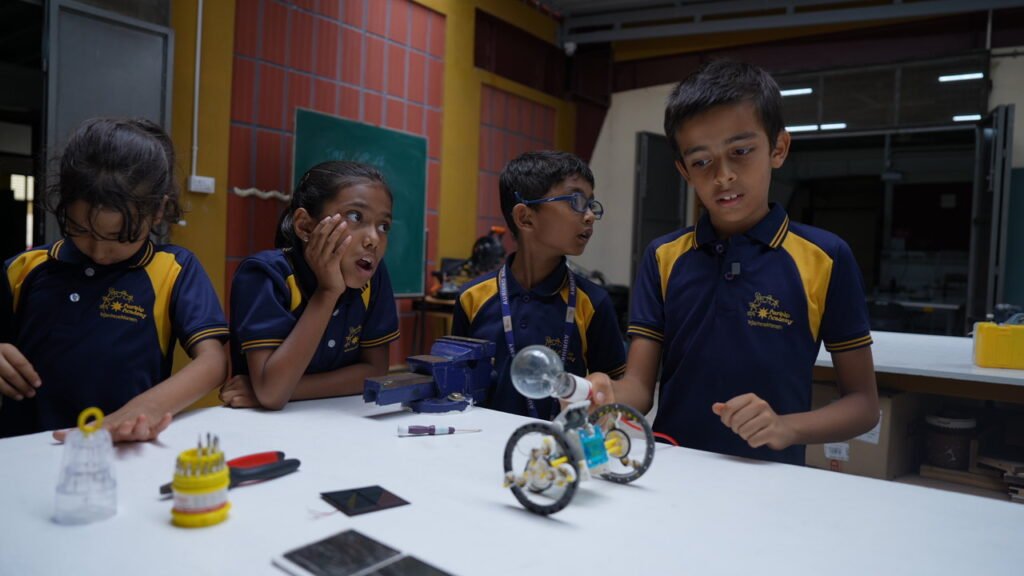
Science, Technology, Engineering, Arts, and Maths woven together — creative thinking applied to real problems, every day.
Inquiry Based Approach
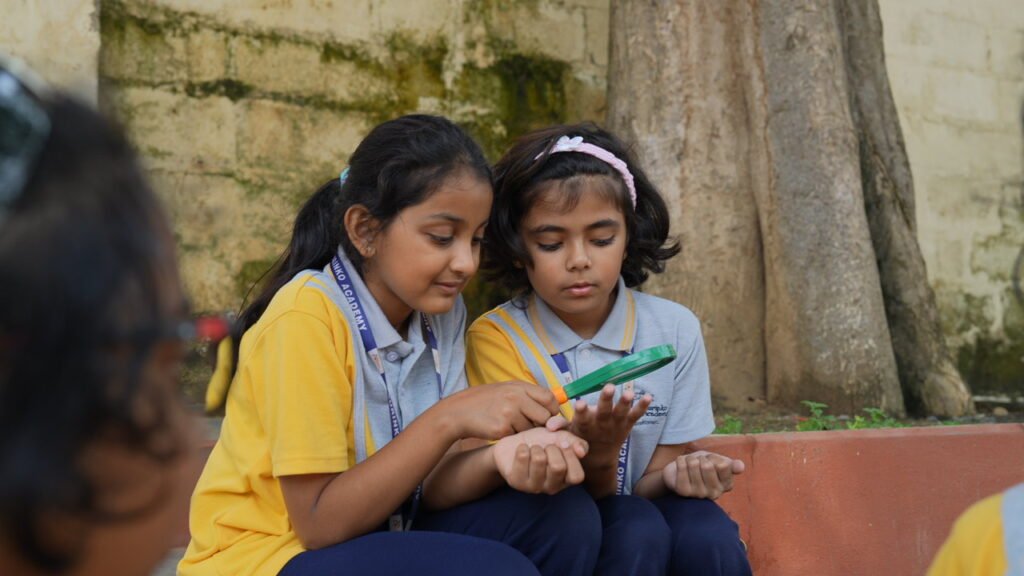
Every new topic begins with a question. Children approach learning as investigators, not recipients.
Justification for Answers
Children are expected to explain their thinking not just give an answer, but understand why it is right.
Reflective Writing
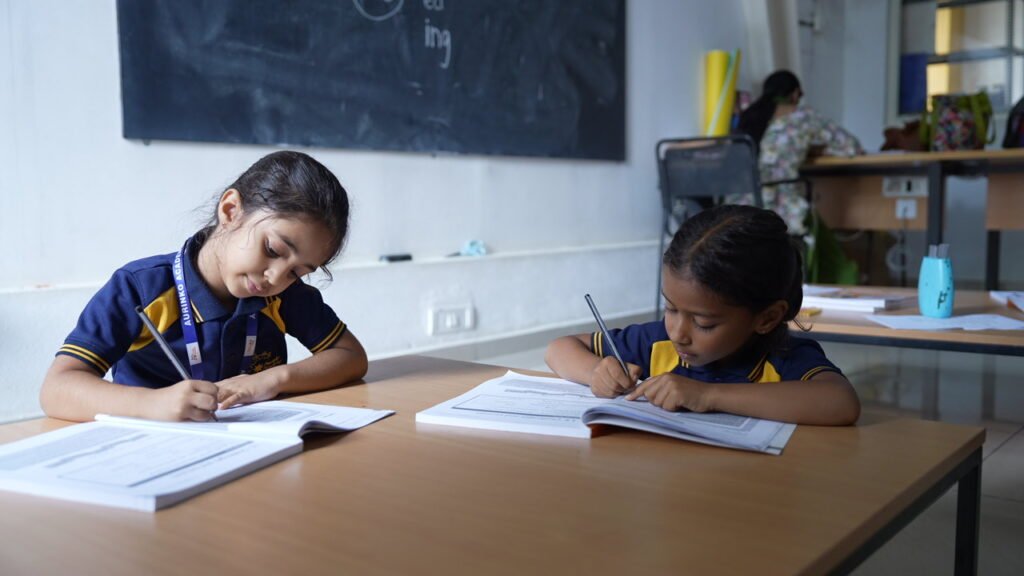
Daily reflective writing across every classroom. Children learn to observe their own thinking and articulate what they have understood.
Problem-Solving Methodology
A consistent approach to tackling new challenges applicable across subjects, and across life.
Hands-on Learning
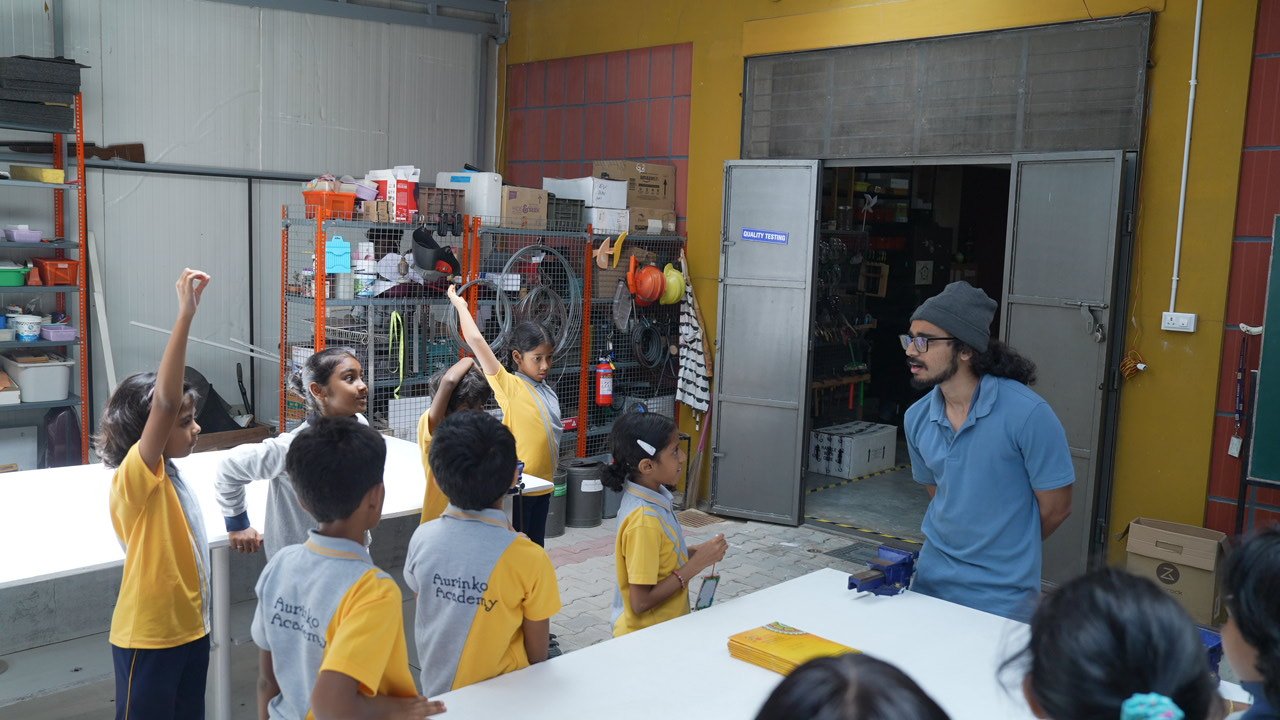
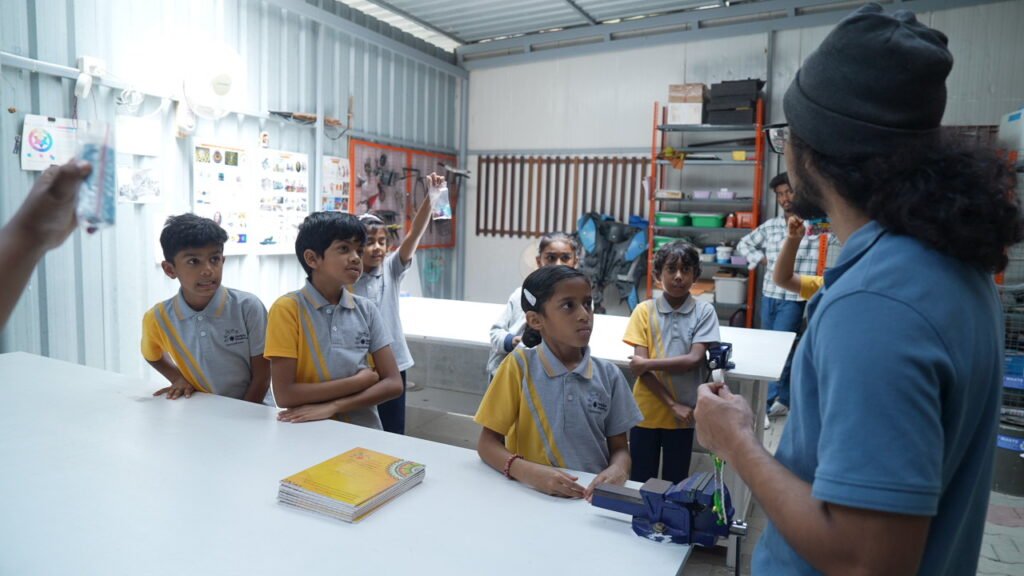
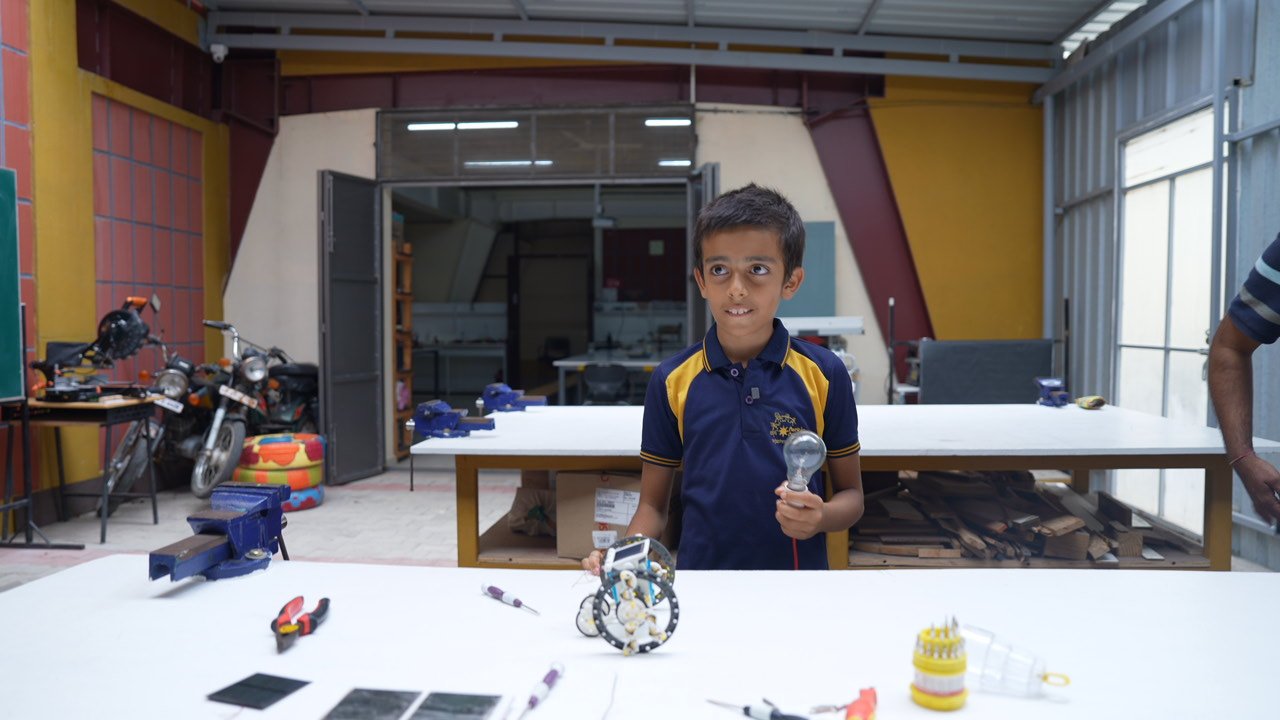
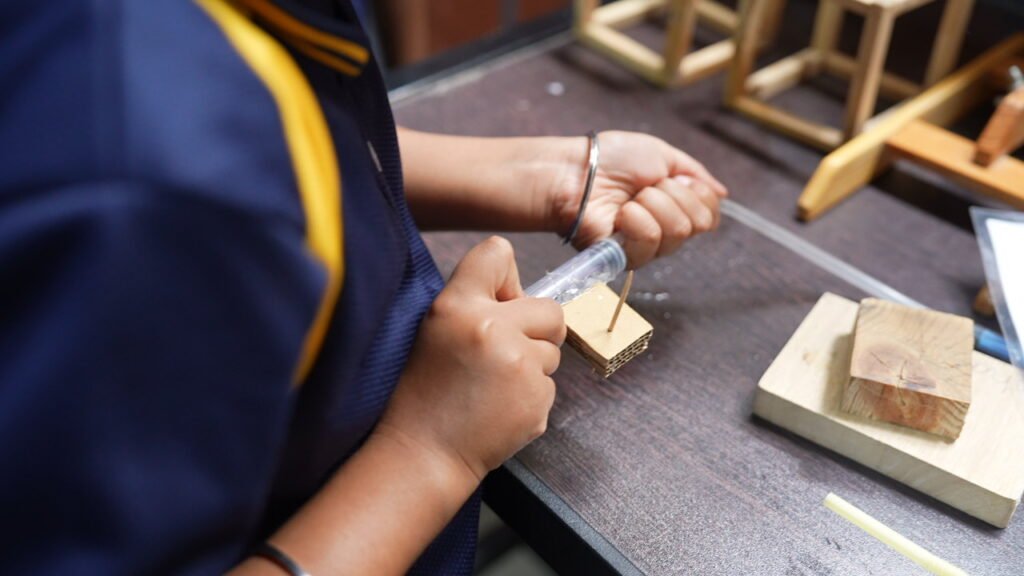
Labs, art areas, tinkering workshops, toy workshops, the entire campus is a learning environment, not just the classroom.
Teacher as Facilitator
Teachers co-construct learning with children, setting up the environment, working alongside students, and guiding rather than directing.
Transparent Assessment
Children know what is expected of them. Assessments are diagnostic, identifying gaps and helping children develop strategies to address them through portfolios, rubrics, and formative assessments.
What Primary School Builds in a Child

Emotional Regulation
Cognitive Development
School Success Skills
Conflict Resolution
Self-Discipline
Decision Making
Language Development
Motor Development
Health Literacy
Healthy Eating Habits
Healthy Relationships

The Four C's and Beyond

The core skills targeted in Aurinko Primary are the four C’s: Communication, Collaboration, Creativity, and Critical Thinking. The wider ecosystem develops additional capabilities alongside these.

Personal Mindset

Working independently, following through on tasks, managing focus despite distraction, adapting when things do not go to plan, these are built deliberately through the way the school day is structured.

Verbal Communication

Organising ideas for a specific audience, listening actively, asking questions to deepen understanding, children develop these skills through daily practice, not occasional lessons.

Collaboration

Completing shared tasks, supporting teammates, giving feedback with care, navigating disagreement to reach a common goal, all practised in real group situations every day.

Problem solving

Defining a problem fully, gathering information from multiple sources, generating and evaluating solutions, and selecting the best one, a rigorous process that children learn to apply across every subject.

Social Awareness

Understanding the consequences of one’s actions, balancing personal needs with others’, navigating different social contexts with awareness and care.

Planning for Success

Setting goals, breaking them into steps, managing time, monitoring progress, and adjusting when needed, skills that will serve children in every area of their adult lives.

How the Day Is Structured

The day begins with assembly at 8 am with the Gayatri Mantra, The Great Invocation, the National Anthem, and chakra exercises. Birthdays are marked with a Sanskrit song. Classes follow immediately after.

Assembly — chanting, exercises, announcements

8:00 am

Classes begin — core subjects: English, Maths, Science, Social Sciences, Languages

8:30 am

Breakfast from a healthy kitchen

9:00 – 9:15 am

Academics and co-curriculars, double periods for core subjects, sports, computers

9:15 – 11:55 am

Lunch — a prayer of gratitude before eating, socialising time

11:55 am

Core subjects, theatre, or workshop and languages on some days

12:30 – 2:30 pm

Home time: older children help younger ones onto buses

2:30 pm